
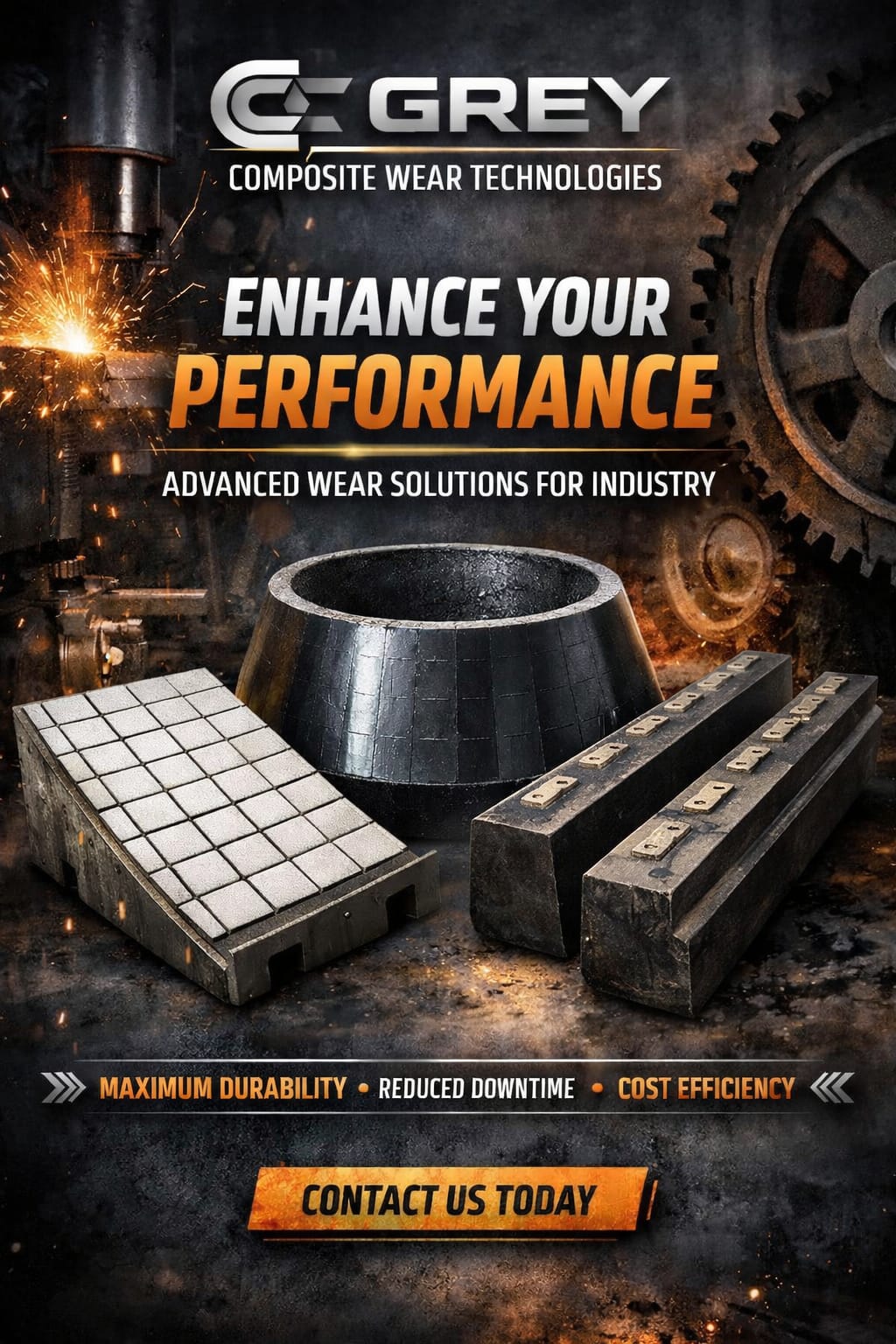
In cement and mining operations, wear parts are not consumables—they are performance-critical assets. Yet most decisions are still made on grade labels like “18% Cr” or “28% Cr,” ignoring microstructure, application conditions, and failure mechanisms. This guide is built for engineers and decision-makers who want clear, technical answers backed by real performance logic. 🔥 Section […]
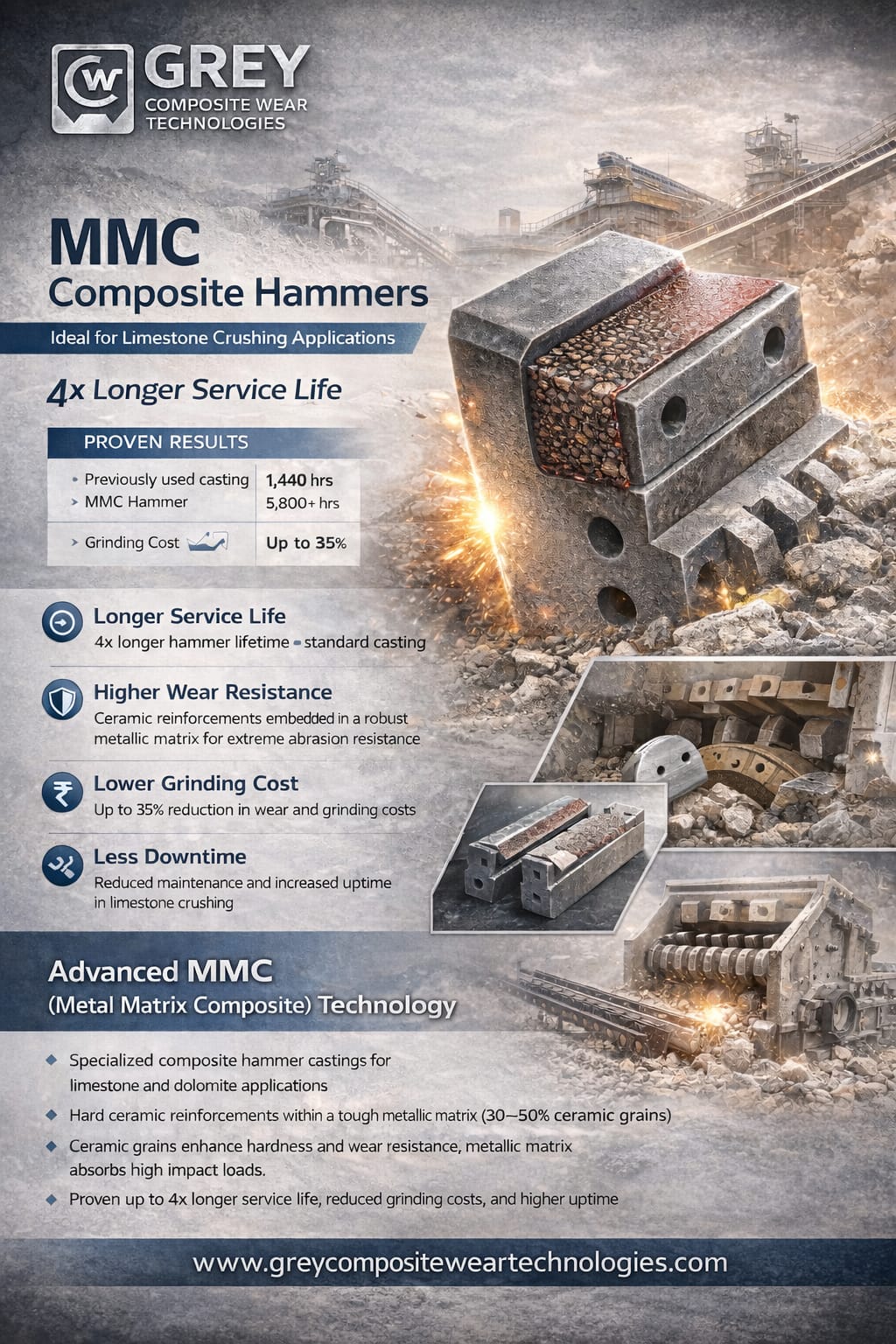
Best Material for Crusher Hammers & Blow Bars | MMC vs High Chrome vs Manganese | GREY Composite Wear Technologies
Best Material for Crusher Hammers & Blow Bars | MMC vs High Chrome vs Manganese | GREY Composite Wear Technologies Selecting the best material for crusher hammers and blow bars is critical for maximizing plant efficiency and minimizing downtime. These components operate under extreme conditions—high impact, abrasion, and cyclic loading—making material selection a key engineering […]
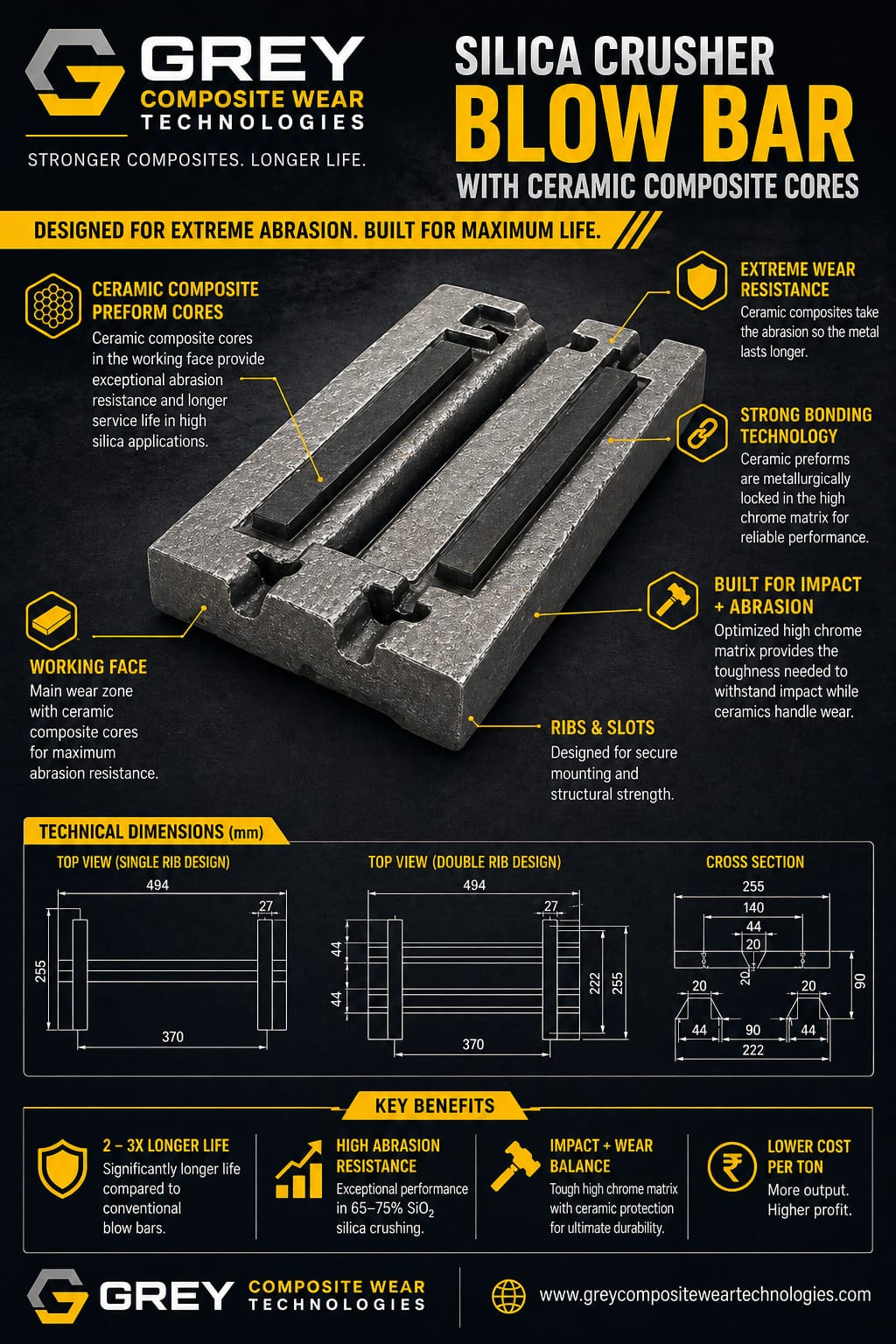
Technical Evaluation of Wear Casting Suppliers: Chemistry, Hardness, Performance & Responsiveness | GREY Composite Wear Technologies
Technical Evaluation of Wear Casting Suppliers: Chemistry, Hardness, Performance & Responsiveness | GREY Composite Wear Technologies For engineers and purchase leaders in cement and mining, supplier selection must move beyond brochures to verifiable technical capability. The right partner demonstrates control over chemical composition, hardness range, application-specific design, proven field performance, technical clarity, and responsiveness. This […]

Can Your Casting Supplier Deliver Consistently? Procurement Checklist for Cement & Mining Wear Parts | GREY Composite Wear Technologies
For procurement teams in cement and mining, the real question isn’t “Who is cheapest?”—it’s: “Can this supplier deliver consistent quality, on time, every time?” Most suppliers fail here because they don’t communicate the trust signals procurement actually evaluates: capacity, QC systems, testing discipline, and lead-time reliability. This guide lays out exactly what to check—and what […]